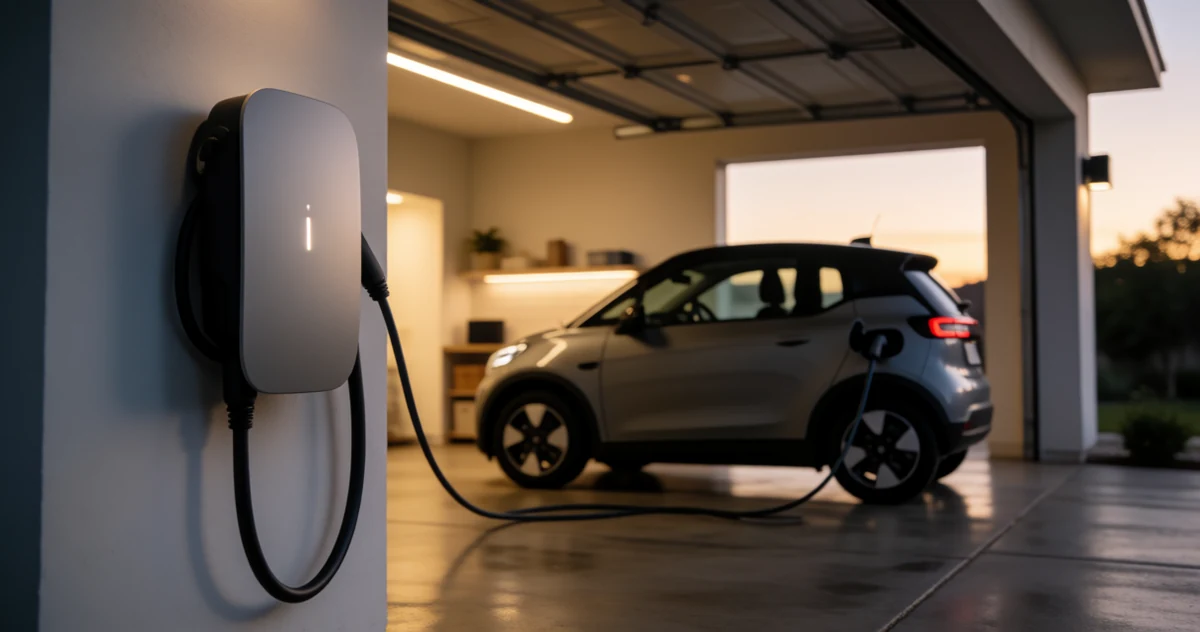
Best EV Chargers for Home Garages and Driveways: Top Picks for 2026
Disclosure: This post contains affiliate links. We may earn a commission at no extra cost to you.
If you’ve recently made the switch to an electric vehicle, or you’re finally ready to ditch the slow trickle of a standard outlet, finding the right home EV charger can make a genuinely big difference in your daily routine. Pulling into your garage and waking up to a fully charged car every morning is one of those small luxuries that quickly starts to feel essential. The good news is that the market for home charging equipment has grown a lot, and there are now some seriously impressive options that work for all kinds of setups, from compact driveways to spacious garages. In this guide, we’re covering some of the most practical, well-designed, and surprisingly feature-packed EV chargers available for home use in 2026. Whether you’re looking for something fast and straightforward, something smart-home compatible, or just a solid all-around charger that gets the job done without any fuss, you’ll find a great option here. Let’s dig in.
Disclosure: As an Amazon Associate we earn from qualifying purchases. Prices and availability shown are accurate as of the date of publication and may change.
Quick comparison
How to choose
Connector Type Compatibility
J1772 connectors work natively with most non-Tesla EVs, while NACS connectors plug directly into Tesla models without an adapter. Before choosing, confirm your vehicle’s charge port standard, because buying the wrong connector type means hunting for an adapter that may or may not be included in the box.
Installation Method
Plug-in units that use a NEMA 14-50 outlet are easier to install and easier to take with you if you move, but they require that you already have or plan to install the correct 240V outlet on a dedicated circuit. Hardwired units typically support higher amperage (up to 48A or beyond) and are permanently mounted, so factor in whether your electrical panel can support the required dedicated circuit before committing to either approach.
Amperage and Charging Speed
Higher amperage delivers more miles of range per hour of charging, which matters if your vehicle has a large battery or your overnight charging window is short. Units in this group range from 40A to 48A, and your vehicle’s onboard charger sets a ceiling on how much of that power it can actually accept, so check your car’s maximum AC charging rate before prioritizing a higher-amp unit.
Smart Features and App Control
WiFi-enabled chargers let you schedule sessions during off-peak utility hours, track energy costs, and start or stop charging remotely through a smartphone app. Most options here require a 2.4 GHz WiFi network, so if your garage or driveway has weak signal, look for a model that advertises a stronger built-in antenna to stay reliably connected.
Weather Resistance and Placement
If the charger will live in a driveway or an open garage exposed to rain, snow, or extreme heat, look for a sealed enclosure rating such as IP66 or NEMA 4, which indicates protection against water and dust ingress. Indoor-only installations have more flexibility on enclosure ratings, but a weather-rated unit gives you the option to relocate the charger outside without buying a replacement.
The picks
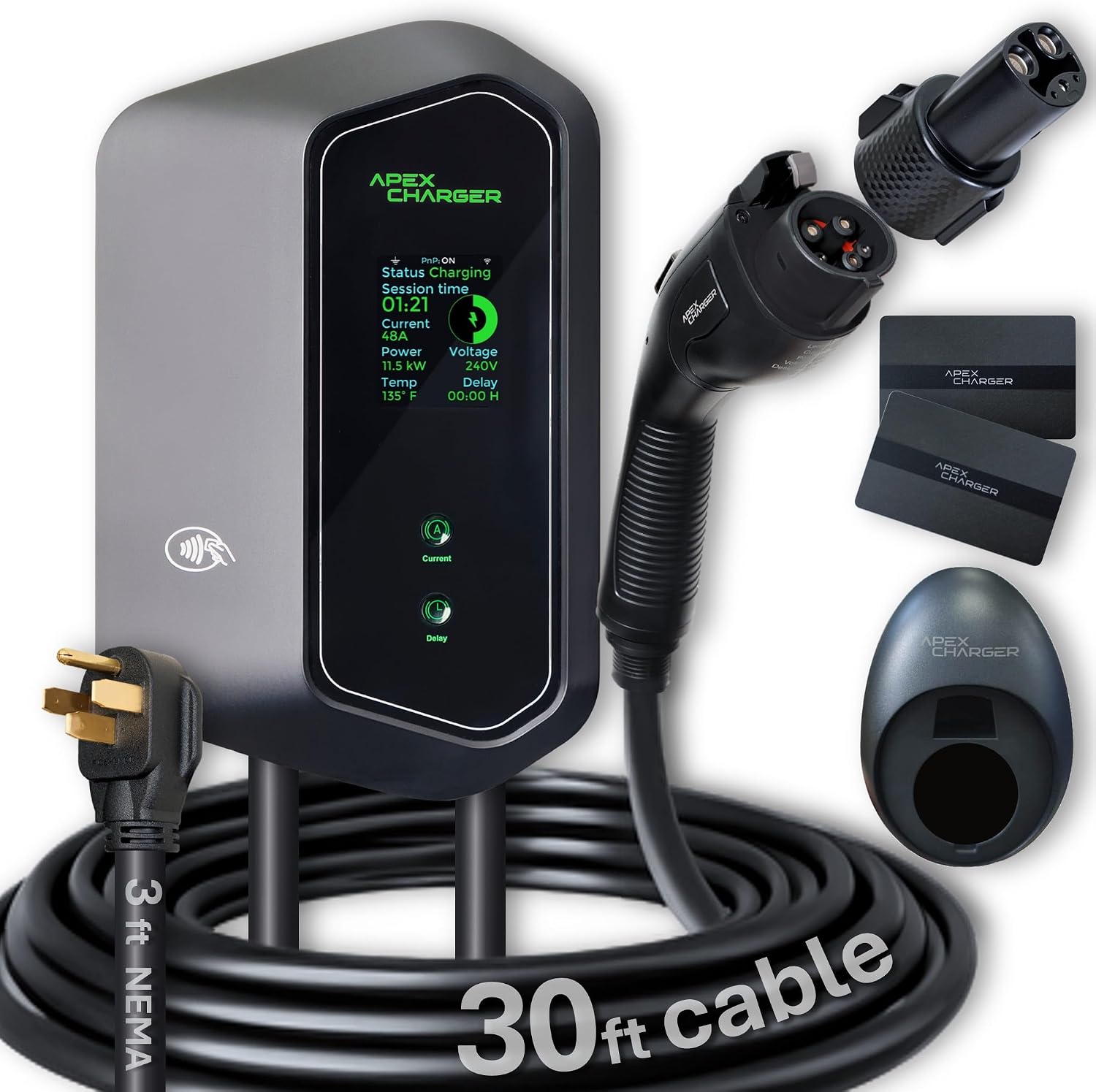
MACH 1: Fast 48 Amp Level 2 EV Charger, Wall-Mount Electric Vehicle Charging Station, 200-240V Hardwire or NEMA 14-50. J1772 car Connector & Tesla NACS, Indoor/Outdoor, 30ft Cable evse Adapter
Budget-focused buyers who want a single universal charger compatible with both J1772 and Tesla NACS vehicles out of the box, with flexible hardwire or plug-in installation.
Ships with both a J1772 connector and a proprietary NACS adapter (PRO 1), plus a 30 ft cable, Bluetooth and WiFi connectivity, RFID cards, and a built-in LED display, making it the most feature-inclusive package in this set at the lowest price.
It is an emerging brand with less established market presence than the other names in this set, and the long feature list means more components that could vary in build quality.
Budget
- Lowest price on this list
- Ships with NACS adapter for universal compatibility
- Flexible hardwire or NEMA 14-50 plug-in install
- Lesser-known brand compared to others in this set
- Display and extra features add complexity
The most affordable pick here and the only one that ships ready to charge both J1772 and Tesla vehicles out of the box with no extra adapter purchase.
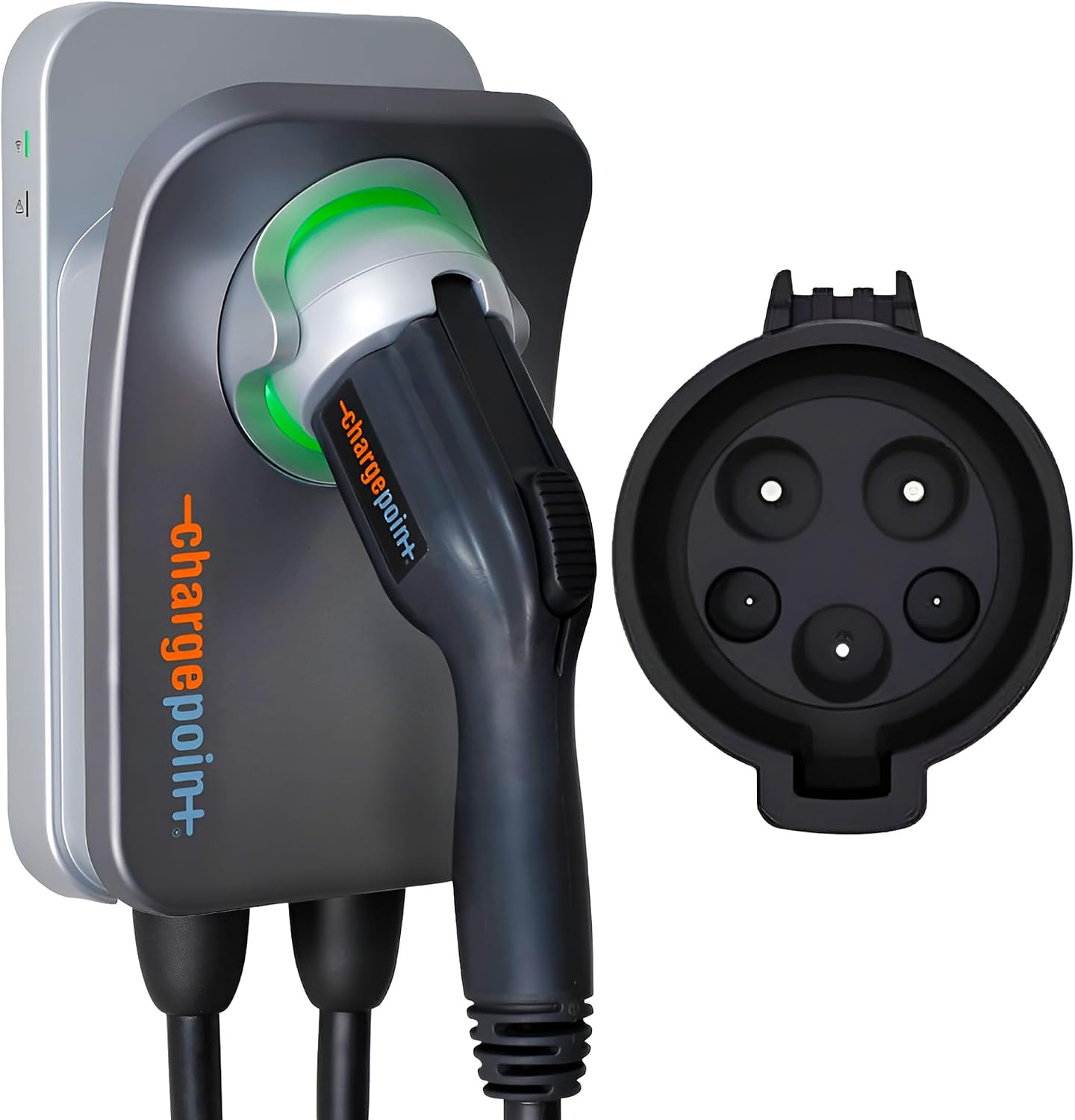
Buy on AmazonChargePoint HomeFlex Level 2 EV Charger J1772 - NEMA 14-50 Plug
EV owners who want a trusted brand name, smart home integration, and access to a vast public charging network through one ecosystem.
Connects to a network of 274k+ charging stations across North America and Europe, giving owners seamless access to public charging alongside home charging through a single app.
The most expensive pick on this list, and Tesla owners still need a separate adapter that is not included.
Premium
- Massive 274k+ station network access
- 24/7 live support included
- Cold-resistant cable for harsh climates
- Priciest option on this list
- Tesla adapter sold separately
The most polished smart charging ecosystem here, but you pay a premium for the brand and network access.
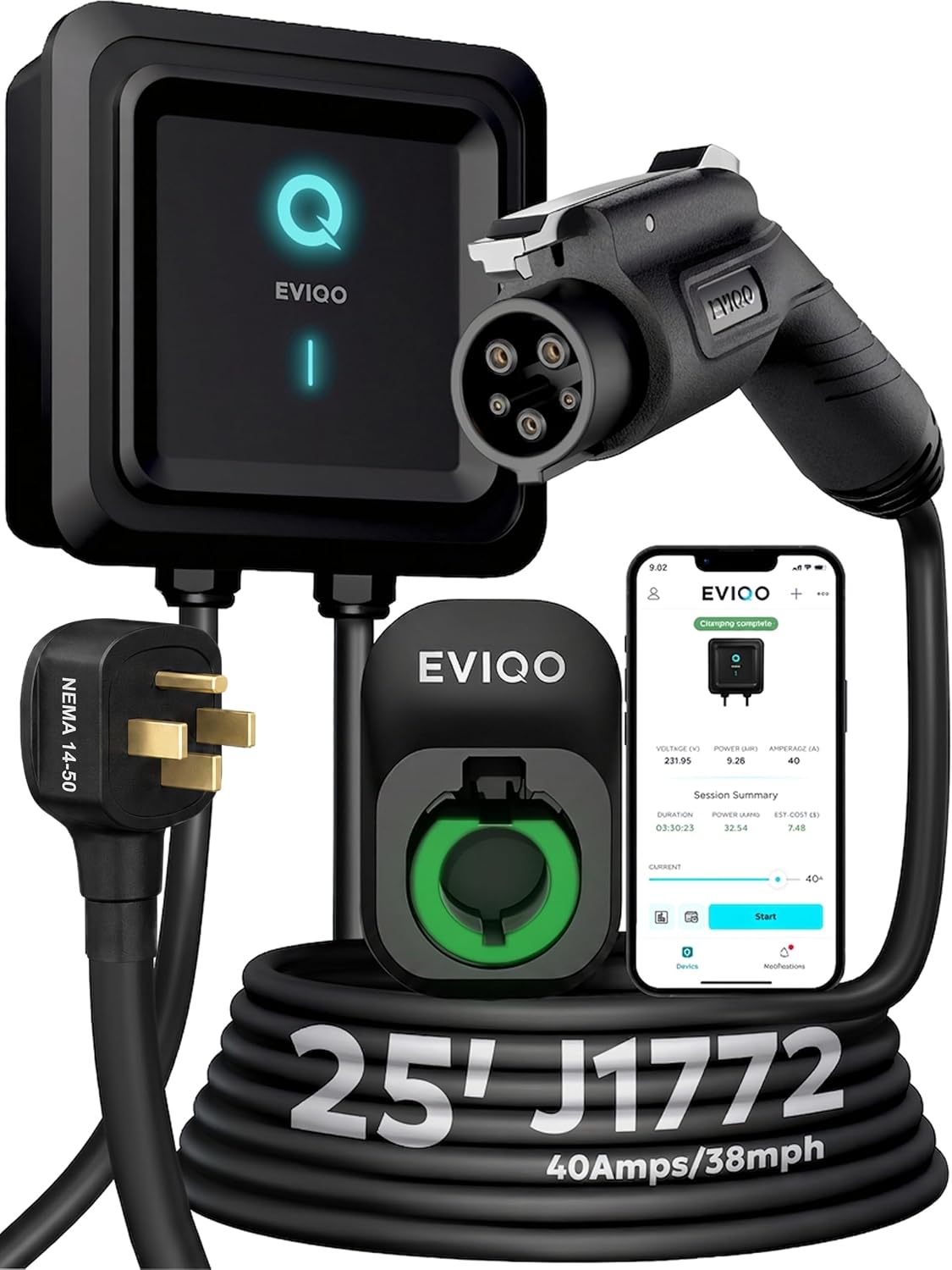
Buy on AmazonLevel 2 EV Charger J1772 40A NEMA 14-50 - 240V Wall Charging Station
J1772 EV owners who want a plug-in setup with app control, a long cable, and robust weatherproofing without committing to hardwiring.
IP66 rated NEMA 4 fully sealed housing combined with internal steel shielding makes it one of the most weather-hardened plug-in options in this set.
Tops out at 40A, which is lower than the 48A hardwired options available at a similar price point in this set.
Mid-range
- IP66 weatherproof sealed housing
- 25 ft cable reaches across garage or driveway
- Off-peak scheduling via app
- 40A ceiling limits peak charge speed
- NACS vehicles need an adapter not included
A weather-tough plug-in charger with smart scheduling that suits most overnight charging needs without an electrician visit.
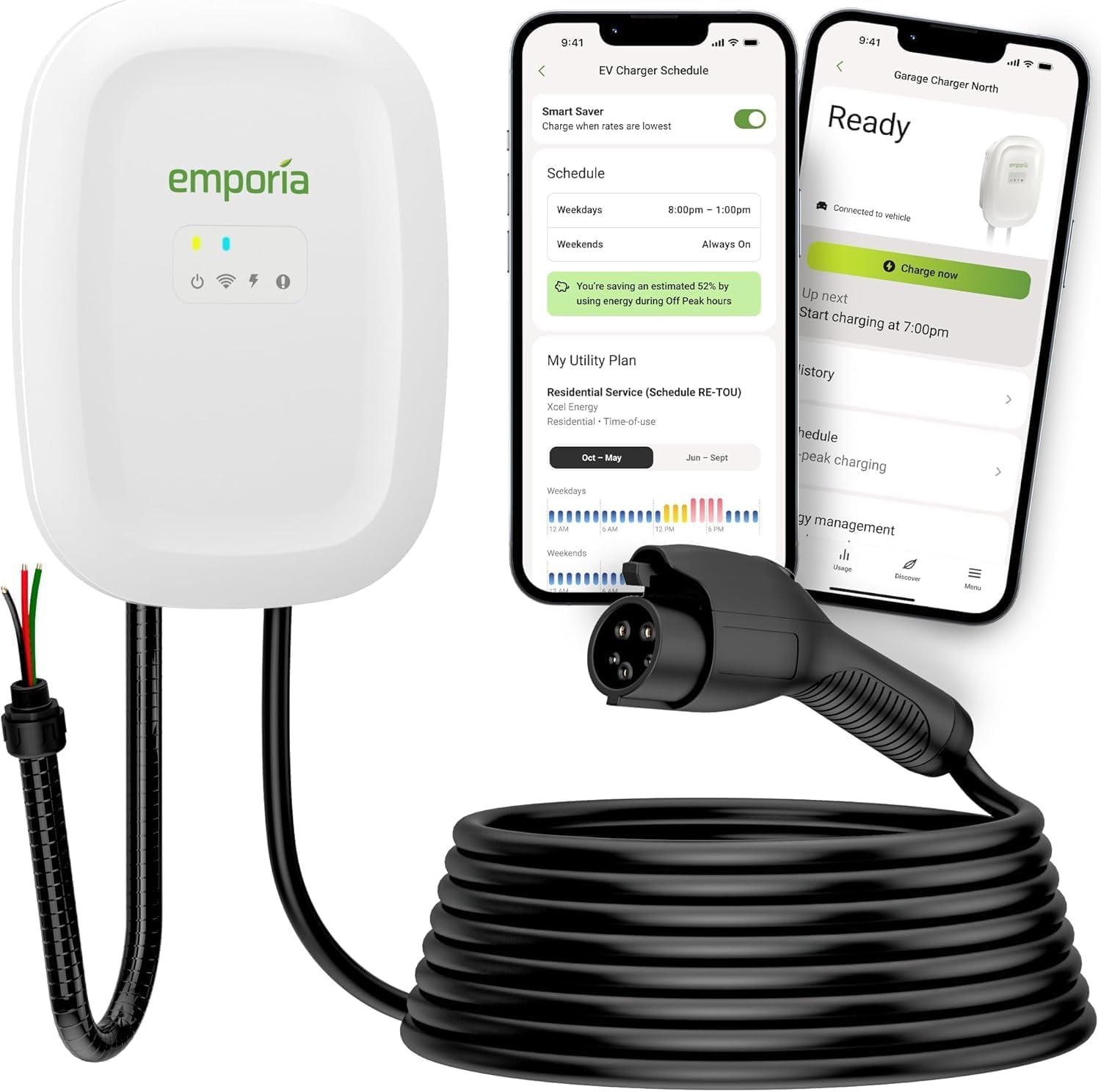
Buy on AmazonEMPORIA Level 2 EV Charger w/ J1772 Connector — 48 Amp, 240V WiFi Enabled Electric Vehicle Charging Station, 25ft Cable, Hardwired with Whip, White
J1772 EV owners who want the highest amperage hardwired output and are comfortable having a licensed electrician handle installation.
Delivers up to 48A hardwired for up to 46 miles per hour of charge speed, the fastest J1772 output in this set, backed by an extensive list of safety certifications including UL and ENERGY STAR.
Hardwired installation requires a licensed electrician and a dedicated high-amperage circuit, adding cost and complexity beyond the charger purchase.
Mid-range
- 48A hardwired for fastest J1772 charging
- Extensive safety certifications (UL, ENERGY STAR, NEC 625)
- WiFi app scheduling and energy tracking
- Requires professional hardwired install
- NACS vehicles need a separate adapter
The fastest J1772 option here for serious daily drivers willing to invest in a proper hardwired installation.
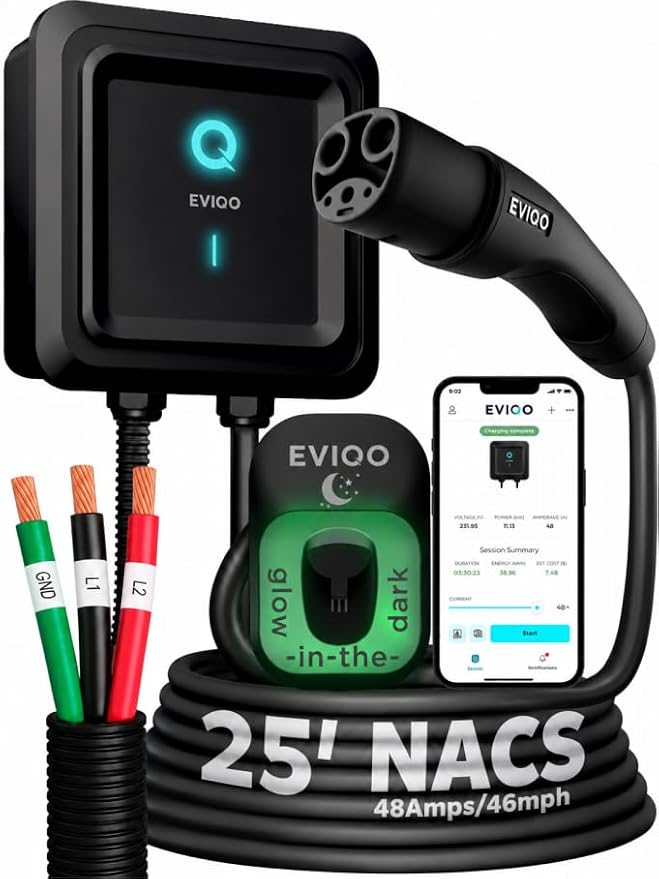
Buy on AmazonTesla Level 2 Charger NACS 48A - Hardwired 240V Wall Level 2 EV Charger
Tesla owners who want a native NACS connection at home with hardwired reliability and app-based control.
Built-in NACS connector plugs directly into Tesla Model S, 3, X, and Y without any adapter, and DIP switches allow unlocking up to 50A on a 70A circuit for extra speed.
Hardwired installation requires a licensed electrician and a dedicated 60A or 70A circuit, raising the total cost of ownership beyond the unit price.
Mid-range
- Native NACS plug, no adapter needed for Tesla
- DIP switch unlocks up to 50A for extra speed
- IP66 weatherproof for indoor or outdoor install
- Requires licensed electrician and high-amperage circuit
- Non-Tesla vehicles need a NACS-to-J1772 adapter (not included)
The best hardwired native Tesla charger here, with flexible amperage tuning for owners who want maximum overnight speed.
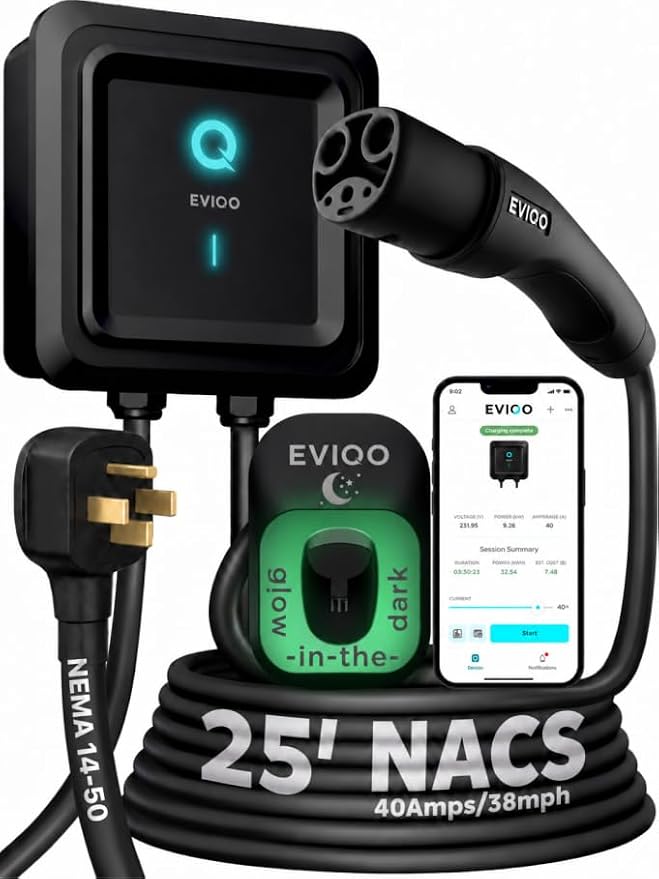
Buy on AmazonTesla Level 2 Charger NACS 40A - Plug in Nema 14-50 240V Level 2 EV Charger
Tesla owners who want a native NACS plug-in charger without the cost and complexity of hardwiring.
Built-in NACS connector with a dedicated button to pop open the Tesla charge port, combined with plug-in NEMA 14-50 convenience that avoids an electrician visit.
Tops out at 40A versus the 48A hardwired NACS sibling in this set, so peak charge speed is lower for owners with higher-amperage capable vehicles.
Mid-range
- Native NACS plug with Tesla port release button
- IP66 sealed weatherproof housing
- Off-peak scheduling via app
- 40A cap is lower than hardwired alternatives
- Non-Tesla vehicles need a separate adapter
The easiest native Tesla plug-in option here for owners who already have a NEMA 14-50 outlet and want zero installation hassle.
Buy on AmazonFinding the right EV charger for your home does not have to be overwhelming. Whether you are outfitting a garage for the first time or upgrading an older setup, the options on this list cover a solid range of needs, budgets, and installation styles. Take a look at the links above, compare a few features that matter most to you, and you will likely find something that fits your situation well. If you are unsure where to start, the Level 2 chargers with smart app controls tend to be a versatile choice for most households. Happy charging, and thanks for reading!
Frequently asked questions
Which of these home EV chargers work with a Tesla, and do I need an adapter?
It depends on the connector standard. The two NACS chargers (the 48A hardwired and 40A plug-in models) have a built-in Tesla-style plug that connects directly to Model S, 3, X, and Y with no adapter. The J1772 chargers from ChargePoint, Emporia, and the 40A wall station use the J1772 connector, which is designed for non-Tesla EVs; Tesla owners can use them with the J1772 adapter that comes with the car, according to those listings. The ApexCharger MACH 1 includes both a J1772 connector and a proprietary NACS adapter it calls PRO 1, positioning it as a single charger for both connector types. Before buying, confirm your vehicle’s port type so you choose the right connector or have the right adapter on hand.
Do I need an electrician to install a home Level 2 EV charger, or can I plug one in myself?
Some of these chargers are plug-in units that require only a pre-existing NEMA 14-50 outlet, while others must be hardwired by a licensed electrician. The ChargePoint HomeFlex, the 40A J1772 wall station, and the 40A NACS Tesla charger all plug into a 240V NEMA 14-50 receptacle, so no hardwiring is needed if the outlet is already there. The Emporia 48A and the 48A NACS Tesla charger are hardwired units, and their listings specifically recommend or require professional installation per National Electrical Code. The ApexCharger MACH 1 listing notes it supports either hardwired or NEMA 14-50 plug installation, giving you flexibility depending on your garage setup.
Can these chargers be used outdoors, and how well do they hold up in harsh weather?
All of the chargers covered in this article are listed as suitable for both indoor and outdoor installation. The 40A J1772 wall station and the 40A NACS plug-in model both carry an IP66 and NEMA 4 rating, which the listings describe as protection against rain, snow, heat, and dust. The ChargePoint HomeFlex listing notes a cold-resistant cable specifically, which is worth considering in climates with freezing winters. The Emporia and NACS 48A hardwired models are also described as weather-rated for outdoor use, but confirm the specific IP or NEMA rating with the manufacturer if your location sees extreme conditions.
How much faster is a Level 2 home charger compared to plugging into a standard wall outlet?
According to seller listings, these Level 2 chargers can charge up to nine times faster than a standard 120V household outlet. The ChargePoint HomeFlex lists up to 45 miles of range per hour, and the Emporia 48A unit lists up to 46 miles per hour at its full 48A output. The actual speed you see depends on your specific vehicle’s onboard charger, which sets the ceiling for how fast it can accept power regardless of what the charger supplies. For most EVs, overnight charging with any of these Level 2 units is enough to top up a depleted battery by morning.
What electrical panel requirements should I check before buying one of these chargers?
The circuit size needed varies by charger. The plug-in NEMA 14-50 units require a dedicated 50A circuit, even though the charger itself draws 40A, because the National Electrical Code requires a circuit rated 25 percent above the continuous load. The Emporia 48A hardwired charger requires a dedicated 60A circuit, and the 48A NACS hardwired Tesla charger also calls for a 60A circuit, with an optional 70A circuit if you want to unlock the 50A setting via DIP switches. Before purchasing any hardwired unit, have a licensed electrician assess your panel to confirm it has an open breaker slot with enough capacity and that the panel itself can support the additional load.