Best Smart Home Hubs and Matter Controllers for Mixed Device Homes
Disclosure: This post contains affiliate links. We may earn a commission at no extra cost to you.
If your home is full of smart devices from different brands, you already know the struggle: apps that don’t talk to each other, routines that break for no reason, and gadgets that work great on their own but refuse to play nicely together. That’s exactly where a solid smart home hub comes in, and with the Matter standard now well established, things have gotten a lot more interesting. A good hub can tie your lights, locks, thermostats, and sensors into one smooth, reliable system, regardless of which brand made them. In this guide, we’re breaking down the best smart home hubs for Matter setups and mixed device homes, covering options that range from surprisingly simple to impressively powerful. Whether you’re just starting to build out your smart home or you’re trying to wrangle a growing collection of devices into something that actually works, there’s something here for you. Get ready for some practical picks, a few unexpected finds, and clear breakdowns of what each hub actually does well.
Disclosure: As an Amazon Associate we earn from qualifying purchases. Prices and availability shown are accurate as of the date of publication and may change.
Quick comparison
How to choose
Protocol Coverage
A hub that handles only Wi-Fi will leave Z-Wave, Zigbee, and Thread devices unsupported, forcing you to add bridge hardware later. Before buying, match the hub’s listed radio protocols against the devices you already own or plan to add, since protocol gaps are rarely fixable through software updates.
Matter Certification
Matter-certified hubs can speak a common language with compatible devices from different brands, which is the core promise of a mixed-device home. Confirm the hub carries actual Matter certification rather than simply claiming broad compatibility, because the two are not the same and the difference affects which future devices will work without extra steps.
Local vs. Cloud Processing
Hubs that run automations locally keep working when your internet connection drops, while cloud-dependent hubs may go unresponsive during outages. If reliability during outages matters to you, check whether the listing specifically states local processing rather than treating fast cloud response as an equivalent substitute.
Ecosystem and Voice Assistant Fit
If you are already invested in Apple Home, Google Home, or Alexa, confirm the hub integrates with that specific platform rather than assuming broad smart home support covers your preferred app. Some hubs act as a bridge for IR-controlled legacy appliances as well, which is worth weighing if you have older TVs or AC units you want to bring into automations.
Device Capacity and Expandability
Hubs cap how many devices they can manage, and a limit that feels generous today can become a constraint as you add sensors, switches, and accessories over time. Check the listed maximum device count against your realistic expansion plans, and factor in whether the hub supports sub-protocols like IR learning that let you include legacy appliances without replacing them.
The picks
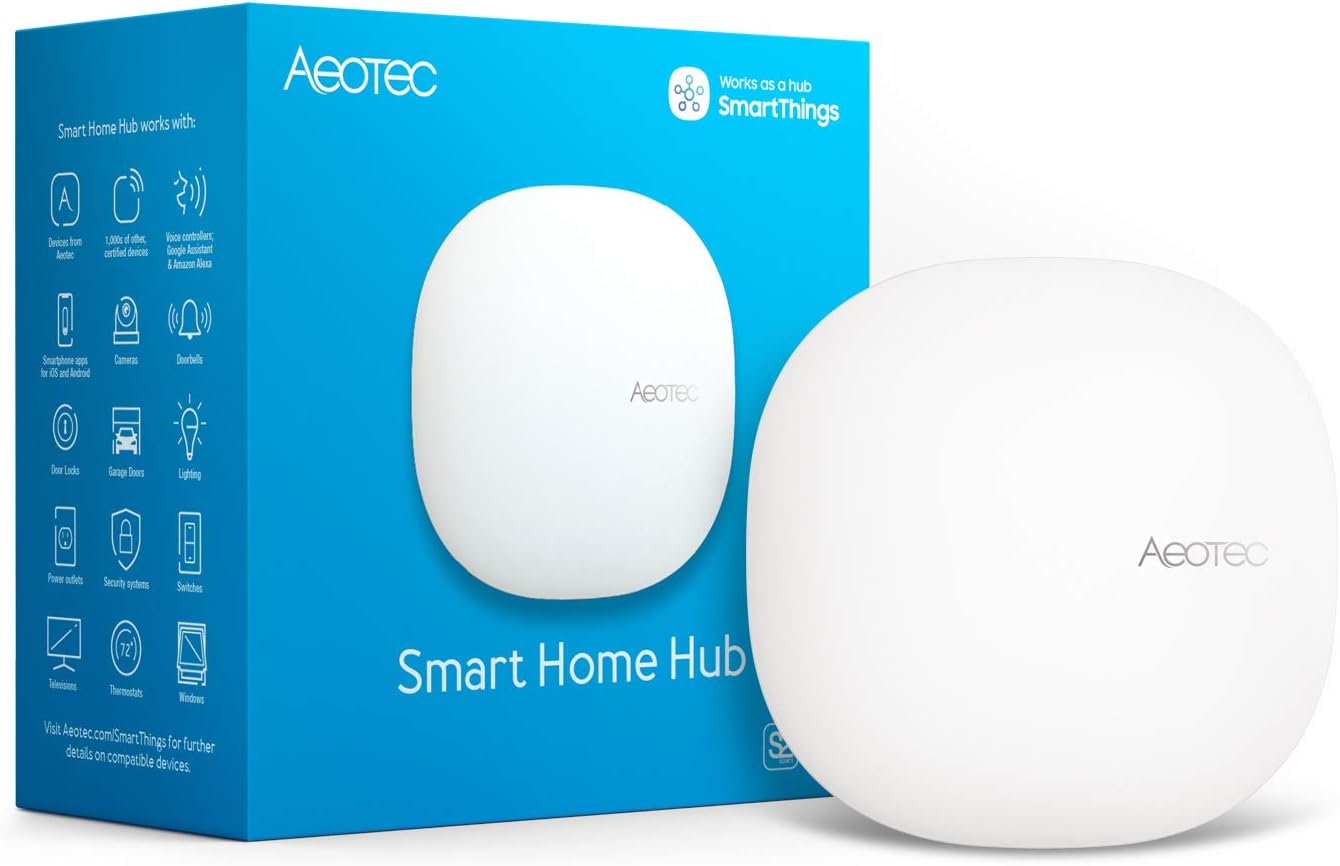
Aeotec Smart Home Hub, Works as a SmartThings Hub, Z-Wave, Zigbee, Matter Gateway, Compatible with Alexa, Google Assistant, WiFi
Mixed-device households that need a single hub bridging Z-Wave, Zigbee, Matter, and Wi-Fi devices under one app.
Certified for Z-Wave Plus, Zigbee, and Matter simultaneously, making it one of the broadest multi-protocol hubs for mixed smart home setups.
Sits at the higher end of this set on price, and local automation depth depends on SmartThings platform continuity.
Premium
- Z-Wave Plus, Zigbee, and Matter all in one unit
- Ethernet and Wi-Fi connectivity options
- Local automations for speed and reliability
- High price relative to most of this set
- Tied to the SmartThings platform ecosystem
The most protocol-versatile pick for serious mixed-device setups that span Z-Wave, Zigbee, and Matter.
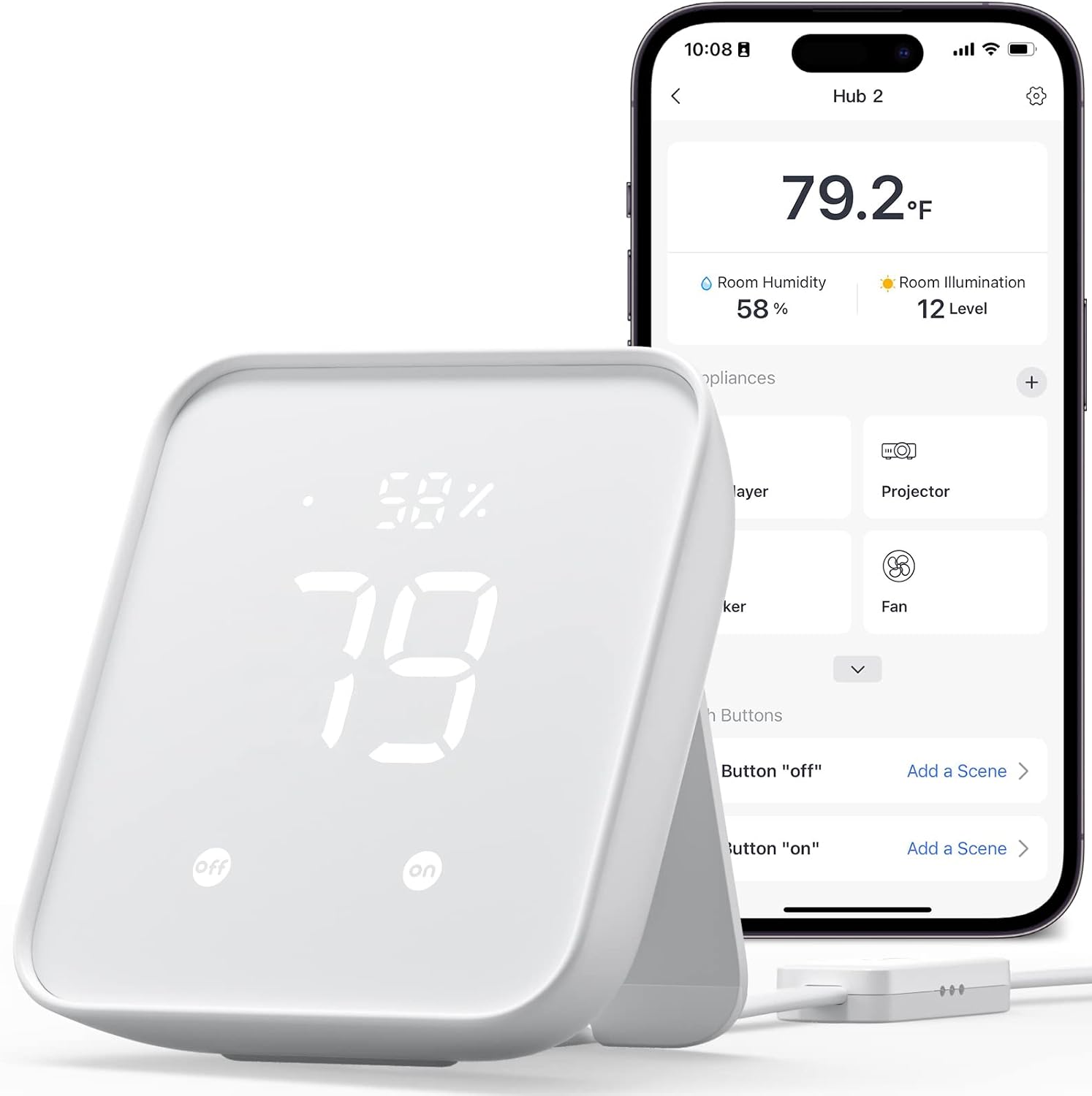
Buy on AmazonSwitchBot Hub 2 (2nd Gen), Work as a WiFi Thermometer Hygrometer, IR Remote Control, Smart Remote and Light Sensor, Link SwitchBot to Wi-Fi (Support 2.4GHz), Alexa, Google Home, Apple Home Compatible
Homeowners who want a hub that also monitors indoor climate and consolidates IR remotes in one device.
Built-in Swiss-made sensor chip with accuracy up to plus or minus 1.8% RH and plus or minus 0.36 degrees F, plus a light sensor, makes it a genuine environmental monitor alongside its hub duties.
No native Z-Wave, Zigbee, Matter, or Thread radio support, so it cannot directly connect to those increasingly common smart home protocols.
Budget
- Built-in precision temperature and humidity sensor
- Consolidates many IR remotes in one app
- Light sensor for adaptive screen brightness
- No Zigbee, Z-Wave, or Matter radio
- Primarily ties you to the SwitchBot ecosystem
A solid IR hub and climate sensor combo for SwitchBot ecosystems, but limited to IR and Wi-Fi devices only.
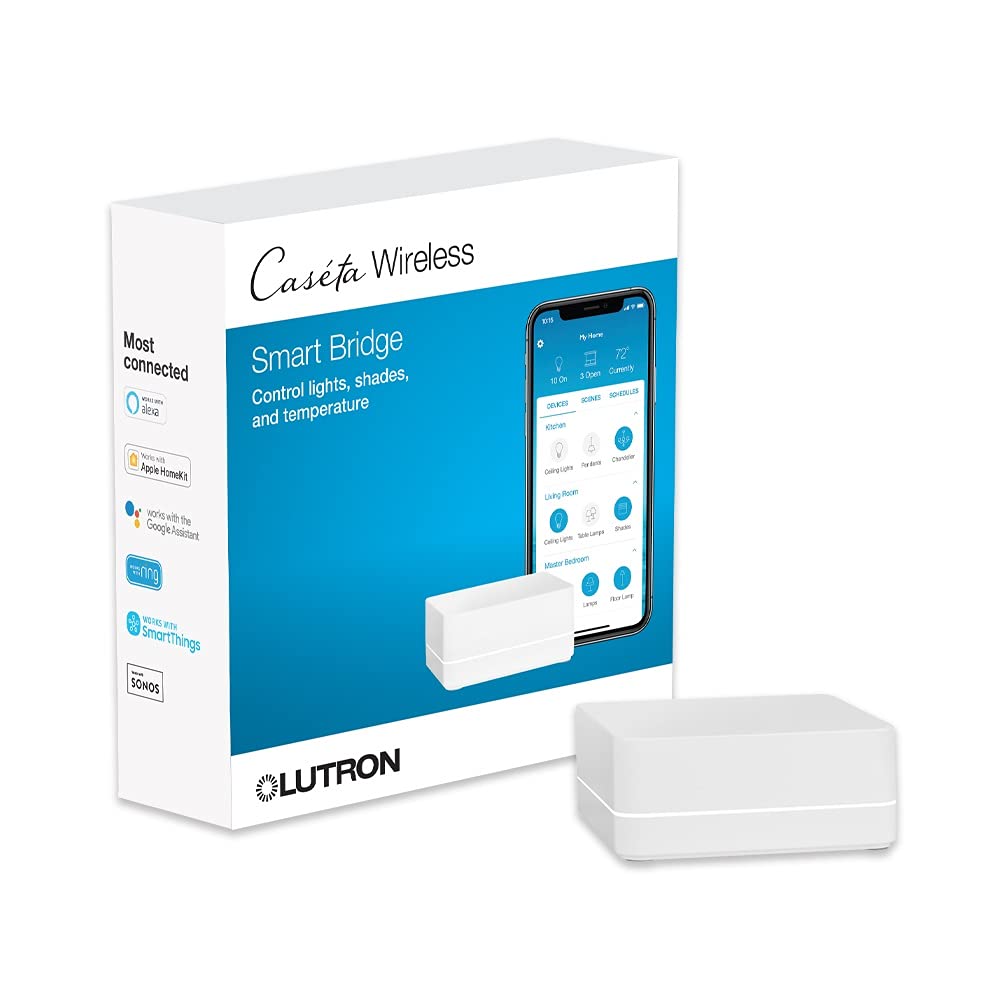
Buy on AmazonLutron Caseta Smart Hub Compatible with Alexa, Apple, Google Home, & More
Lighting-focused homeowners already invested in or planning a Lutron Caseta switch and shade system.
Supports up to 75 Caseta devices and integrates with Alexa, Apple HomeKit, Google Assistant, SmartThings, Sonos, Ring, Ecobee, and more, giving it unusually wide third-party voice and platform coverage.
Only works with Lutron Caseta and Serena products, so it cannot control Zigbee, Z-Wave, or Matter devices directly.
Mid-range
- Supports up to 75 Caseta devices
- Broad voice assistant and platform integrations
- Geo-fencing and scheduling built in
- Caseta and Serena devices only
- No Zigbee, Z-Wave, or Matter support
The definitive hub for Lutron Caseta lighting and shade ecosystems, but a narrow fit outside that world.
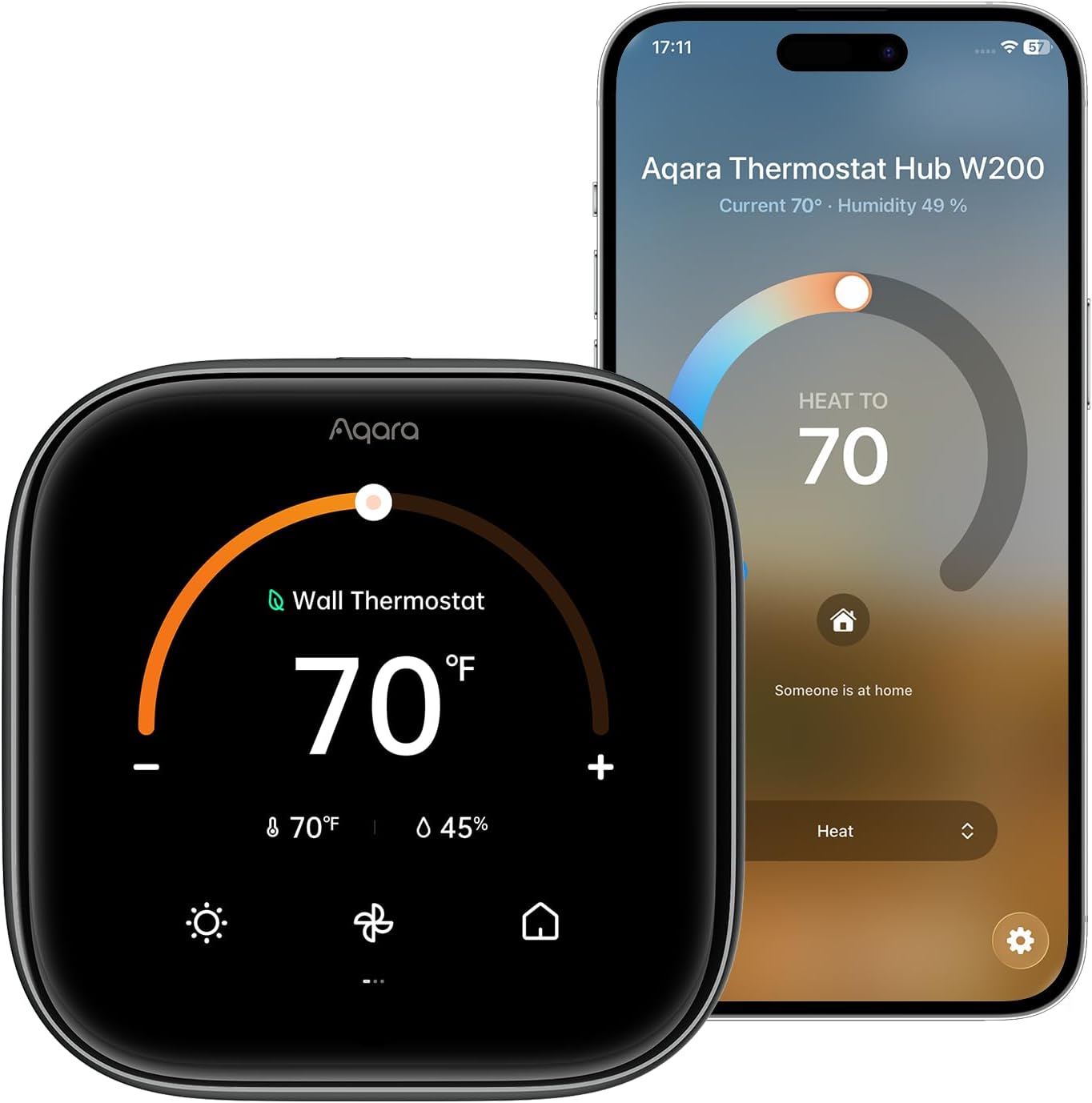
Buy on AmazonAqara Smart Thermostat W200 with Apple Adaptive Temperature
Apple Home users who want deep iOS and HomeKit integration for HVAC control, including Adaptive Temperature and Clean Energy Guidance features.
Apple Adaptive Temperature adjusts the thermostat automatically based on iPhone activity states like home, sleep, and away, offering a hands-off comfort and energy saving experience without manual scheduling.
Adaptive Temperature and Clean Energy Guidance require a home hub running software version 26 or later, adding a hardware dependency outside this product, and Clean Energy Guidance is limited to the contiguous US.
Premium
- Apple Adaptive Temperature for hands-off comfort
- Works with about 85% of HVAC systems
- Clean Energy Guidance for smarter energy use
- Requires separate Apple home hub hardware
- Clean Energy Guidance limited to contiguous US
A compelling Apple-first smart thermostat for HomeKit households, but it leans heavily on Apple ecosystem hardware requirements.
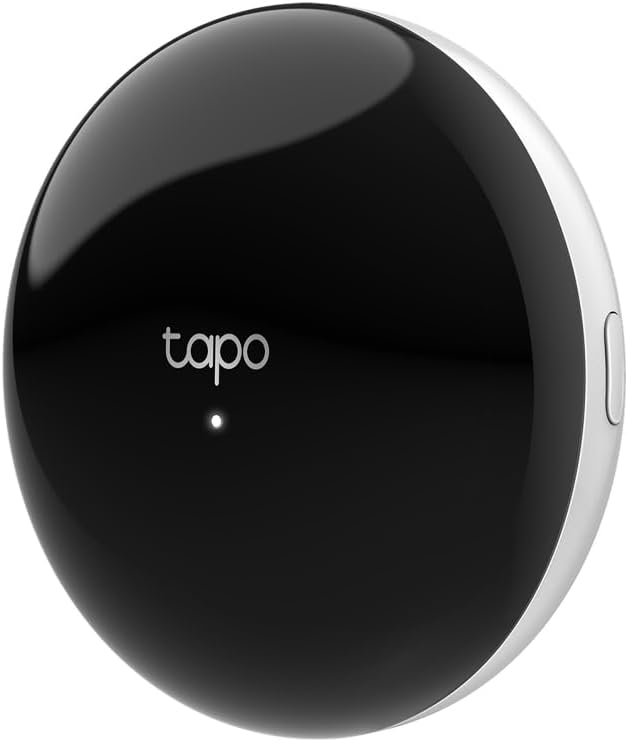
Buy on AmazonTapo Smart IR & IoT Hub w/ Chime, Matter-Certified, H110, Universal Remote
Budget-conscious shoppers who want a Matter-certified hub with an IR blaster and built-in chime in a single compact unit.
Matter certification combined with a built-in chime and IR learning for 8,000-plus brands gives it exceptional all-in-one functionality at a very accessible price point.
As a Tapo-branded hub, deeper automations and sensor integrations work best within the Tapo ecosystem, which may limit flexibility for users with diverse non-Tapo devices.
Budget
- Matter-certified for broad platform compatibility
- Built-in chime removes need for a separate speaker
- Local processing keeps automations running offline
- Deepest features favor the Tapo device ecosystem
- IR and chime combo may overlap with existing gear
An impressive feature-packed Matter hub at a low price, ideal for Tapo ecosystem builders who also want IR control and chime notifications.
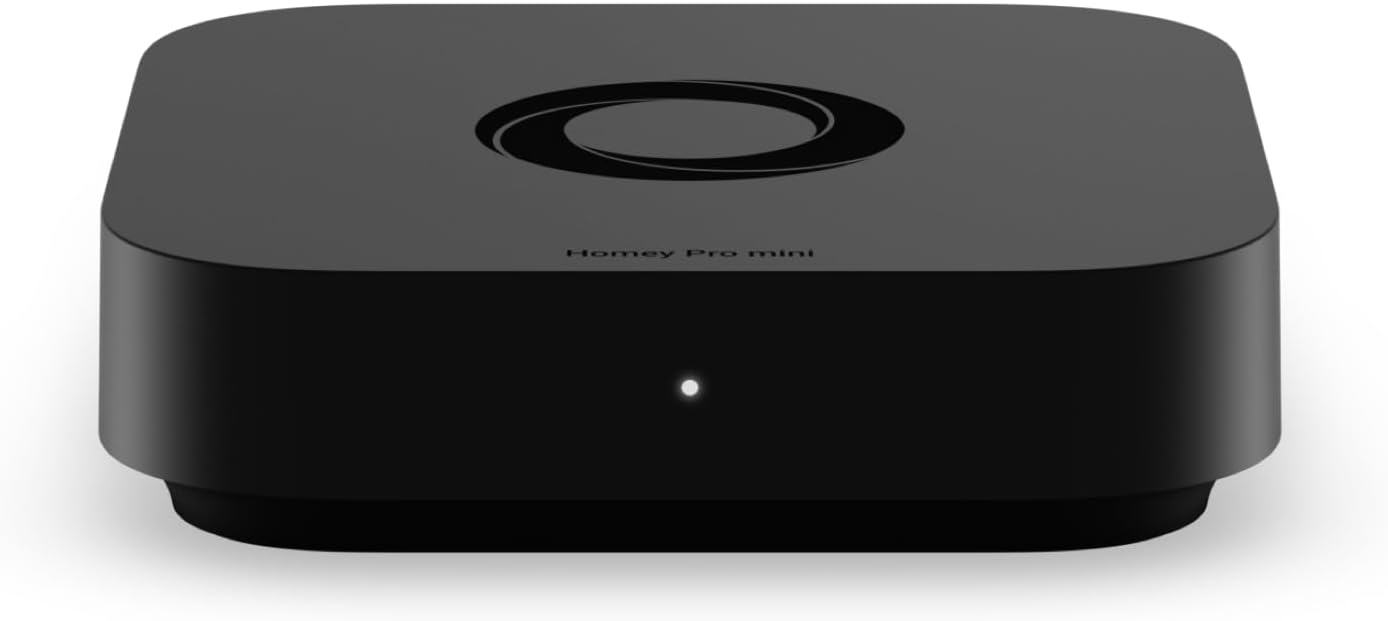
Buy on AmazonHomey Pro mini | Smart Home Hub for Home Automation – Features Zigbee, Ethernet, Matter & Thread. Compatible with Apple Siri, Amazon Alexa & Google Home.
Power users who want a dedicated premium hub with Zigbee, Matter, Thread, and advanced automation tools like energy dashboards and historical insights.
Combines Zigbee, Matter, and Thread radios with advanced features like energy monitoring, real-time dashboards, and historical insights in a single compact hub, making it the most feature-complete option in this set.
At the highest price in this set, it is a significant investment, and its value is best realized by users who will actively use its advanced automation and energy tracking capabilities.
Premium
- Zigbee, Matter, and Thread radios combined
- Advanced energy monitoring with historical insights
- Customizable dashboards and automation flows
- Priciest pick in this set
- Advanced features may overwhelm casual users
The most expensive pick here and the most capable for advanced automation, energy tracking, and multi-protocol Thread and Matter households.
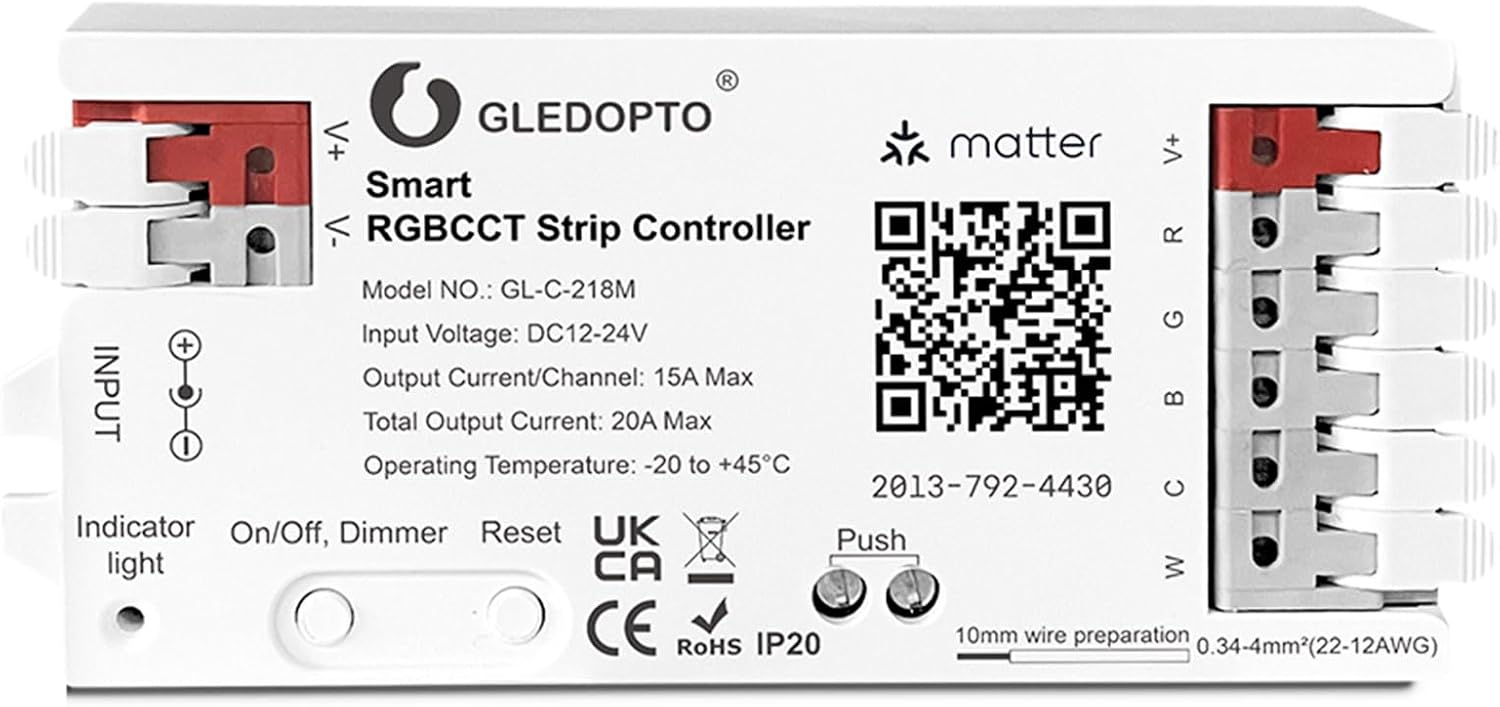
Buy on AmazonGLEDOPTO Matter RGBCCT LED Controller 20A Current Max for PWM Analog LED Strip Light APP Voice Control RGBW RGB Dimmable Work with Homekit Google Amazon Echo Alexa (Matter Hub Required)
DIY LED strip installers who want Matter-compatible RGBCCT control and already own a Matter hub.
Supports 16 million RGB colors plus adjustable white temperature from 2200K to 6500K with smooth dimming, and handles up to 20A total current for long high-density LED strip runs.
Requires a separate Matter hub to function, meaning it adds no hub capability of its own and is not a standalone smart home controller.
Budget
- 20A current capacity for long LED strip runs
- Full RGBCCT with 16 million colors and tunable whites
- Reverse polarity protection and quick-connect terminals
- Requires a separate Matter hub to operate
- Not a hub itself, limited to LED strip control only
The most affordable product in this set and a strong Matter LED controller for long strip installations, but it needs an existing Matter hub to work.
Buy on AmazonFinding the right smart home hub can make a real difference, especially when you’re juggling devices from different brands or easing into a Matter-compatible setup. Whether you’re just getting started or looking to upgrade what you already have, any of the options featured here are worth a closer look. Each one brings something a little different to the table, so it really comes down to your setup, your priorities, and how you like to manage things day to day. Click through the links to explore details and current pricing. Hope this helped point you in a useful direction, and thanks for reading!
Frequently asked questions
Which of these hubs actually works with Matter devices, and what does that mean for my existing non-Matter gadgets?
The Aeotec Smart Home Hub (running SmartThings), the Tapo H110, and the Homey Pro mini all carry Matter certification according to their listings, making them the strongest candidates if you are building a Matter-forward setup. Matter certification means the hub can act as a controller or bridge so that devices from different brands talk to each other over a shared standard without requiring proprietary cloud links. For existing non-Matter gadgets, hubs with IR learning (the Tapo H110 and SwitchBot Hub 2 both list this) can still pull older appliances like TVs and air conditioners into automations, so you do not have to replace everything at once. The Lutron Caseta hub is not listed as Matter-certified in the supplied evidence, so confirm current compatibility directly with Lutron if that standard matters for your plan.
What radio protocols does the Aeotec Smart Home Hub support, and why does that matter for a mixed-device home?
The Aeotec listing states certification for Z-Wave Plus (V3 model), Zigbee, Wi-Fi, and Matter, which is a notably broad protocol stack for a single hub. In a mixed-device home this matters because older Zigbee light bulbs, Z-Wave door locks, and newer Matter sensors can all connect through one app (SmartThings) rather than requiring separate bridges for each protocol. The listing also notes that many automations run locally, which means your routines keep working even if the cloud connection drops. If you are unsure whether a specific device you already own uses Z-Wave or Zigbee, check that device’s packaging before assuming compatibility.
How many devices can the Lutron Caseta hub handle, and is it a good fit if I want to control more than just lights?
The Lutron Caseta Smart Hub listing states a cap of 75 Caseta devices, which is plenty for most single-family homes focused on lighting and shades. However, the listing positions it specifically around Caseta dimmers and Serena shades rather than a broad smart home ecosystem, so it is better described as a lighting-and-shades specialist than a general hub. It does list integrations with Alexa, Apple HomeKit, Google Assistant, Ring, Ecobee, SmartThings, and Sonos, so it can sit alongside a broader hub rather than replacing one. If you need to add sensors, locks, or cameras from many different brands, pairing it with a multi-protocol hub would be a more practical approach.
How hard is the setup for these hubs, and do any of them work without a constant internet connection?
The Aeotec listing specifically notes that setup takes minutes via the SmartThings app and supports both wired Ethernet and Wi-Fi, which gives you a stable fallback connection option. The Tapo H110 listing states that local processing keeps core automations running during internet outages, which is a meaningful reliability advantage for households with spotty connectivity. The SwitchBot Hub 2 connects over 2.4 GHz Wi-Fi only according to its listing, so confirm your router broadcasts that band if you run a newer Wi-Fi 6 setup that has 2.4 GHz disabled. For any hub, the exact scope of local versus cloud-dependent features is worth confirming with the manufacturer because listings often describe this at a high level only.
Is a hub with a built-in IR blaster worth it compared to buying a dedicated IR bridge separately?
A combined hub and IR blaster, like the SwitchBot Hub 2 or Tapo H110, reduces the number of plugged-in devices and keeps everything in one app, which simplifies daily management. The SwitchBot Hub 2 listing adds useful sensors (temperature, humidity, and light) on top of IR control, so it can trigger automations based on actual room conditions rather than just schedules. The Tapo H110 listing claims compatibility with over 8,000 brands via IR and includes a built-in chime, making it a denser feature bundle for a single unit. If you already own a capable multi-protocol hub and only need IR for a few legacy appliances, a standalone IR bridge could cost less, but for someone starting fresh the all-in-one approach tends to reduce setup complexity.